
Current research
Four active lines of work, all collaborative. Three concern hummingbirds: how they respond physiologically to warming temperatures, the biomechanics and energetic cost of their flight, and how they manage daily energy budgets. The fourth applies the same methods to a different problem — the energetic cost of bone injury in commercial laying hens.
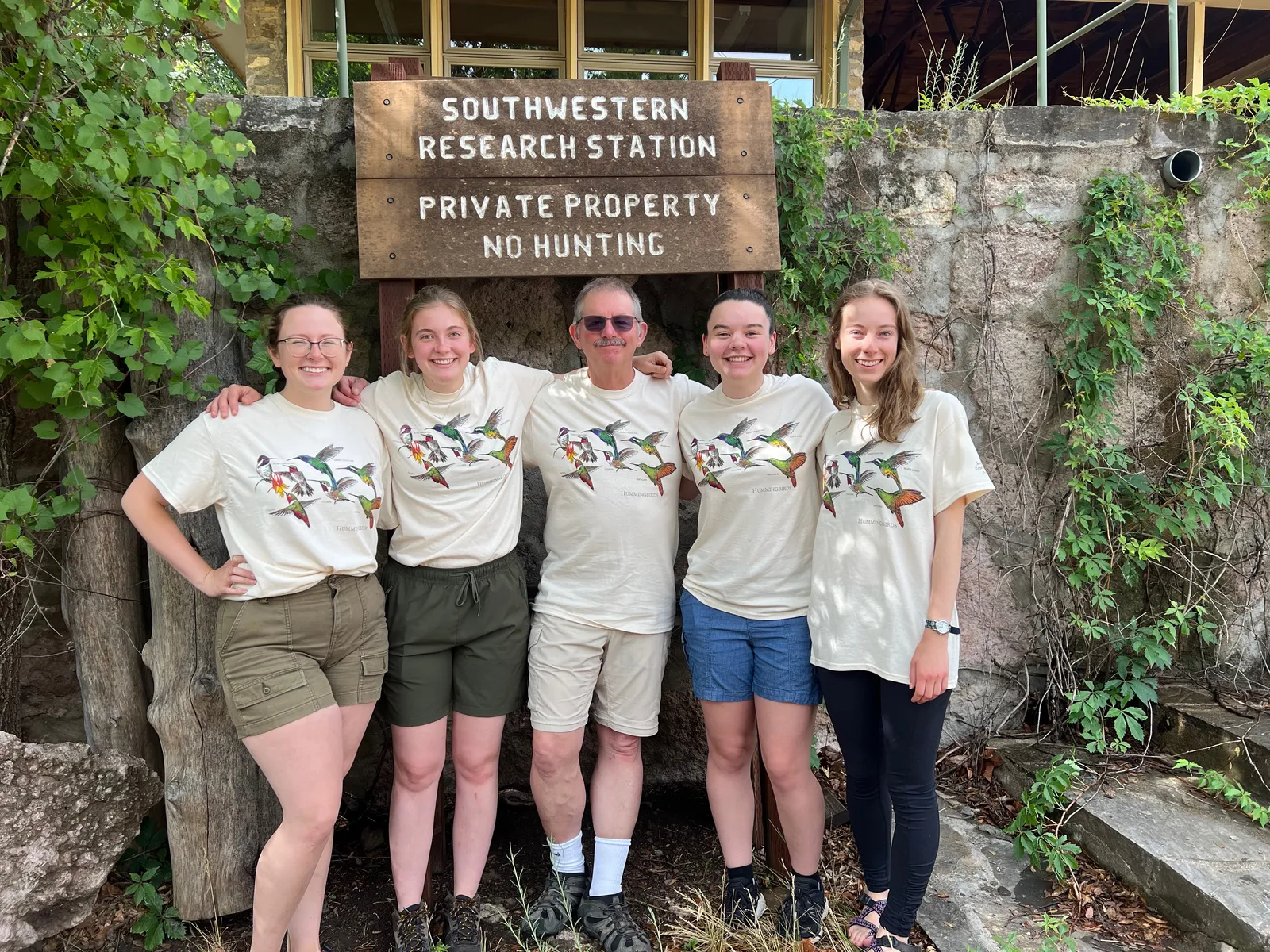
Physiological effects of warming environmental temperature on hummingbirds
My lab has been exploring how hummingbirds respond physiologically to warming environmental temperatures resulting from climate change. This work is a continuation of a project initially funded by NASA entitled “Combining Remote-Sensing and Biological Data to Predict the Consequences of Climate Change on Hummingbird Diversity,” involving several researchers from across the country.
Current work in this area continues in two primary areas:

Heat dissipation during forward and hovering flight
Because bird flight muscles have low mechanical efficiency, extra heat is produced during both forward and hovering flight. At warm environmental temperatures this can be an issue because the body plumage must remain in aerodynamic form. Our previous work shows that this extra heat must be dissipated through specific heat dissipation areas (HDAs) around the eye, shoulder, and legs where feather density is low (IR video of a hovering hummingbird). This appears to be true for both passive and evaporative heat dissipation. When environmental temperatures are warm, our current data suggest that these HDAs are insufficient for dissipation of all accumulated heat. My lab is engaged in answering questions related to how hummingbirds, and birds in general, deal with the need to dissipate this heat when environmental temperature is high. We have expanded this work to include collared doves, work recently published in the Journal of Experimental Biology.
Nocturnal body-temperature management by hummingbirds
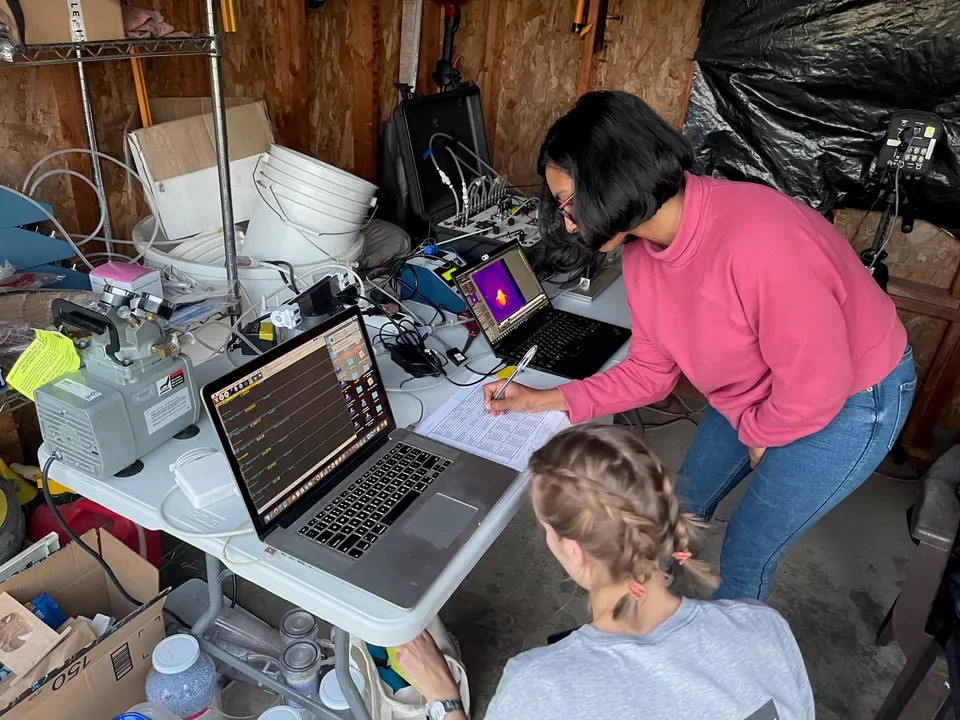
After measuring nocturnal metabolic rate in several species of hummingbirds under semi-natural conditions in both Arizona and Ecuador, it became clear that bouts of hypothermia associated with torpor were more complicated than a dichotomy between normothermy and deep torpor. Based on continuous imaging of hummingbirds in southeastern Arizona using an infrared video camera, we found that our study species were all capable of using a more shallow form of nocturnal torpor. More recently my lab has been involved in molecular studies which have identified specific genes up- or down-regulated during torpor initiation and arousal. Studies such as these will provide valuable insight on how physiological regulation of torpor might be impacted by warming temperatures.
Hummingbird foraging energetics and ecology
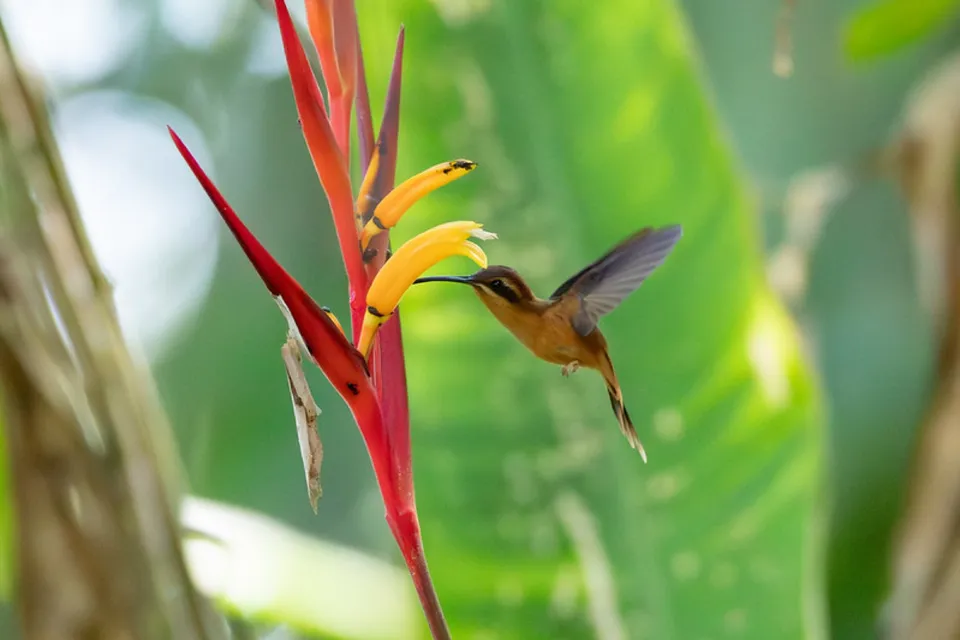
Hummingbirds are unique in many ways, not the least of which is their ability to manage an endothermic lifestyle in spite of high metabolic costs due in part to their small body size and ability to hover. This work focuses on questions related to how hummingbirds manage daily energy budgets when faced by these high energy costs. Further, because energy budgets are fueled with sugar from dilute nectars, we explore how dilute nectars can be and still provide energetic value.
A hummingbird carries only a few hours of usable fuel, which leaves little margin for error. Field measurements of daily energy expenditure in free-living birds show that hummingbirds do not hold to a fixed rate of spending. Instead they adjust the amounts allocated to activity, thermoregulation, and overnight energy savings as food availability and weather change.
A bird feeding on weaker nectar can compensate by increasing intake, but only to a point. Beyond that point the water load exceeds what the gut and kidneys can process, and the nectar no longer provides net energetic value regardless of how much is available. Recent work identifies this physiological ceiling, which constrains which plants can support hummingbirds as pollinators and how that constraint may shift as climate alters nectar production.
Hummingbird flight energetics and biomechanics
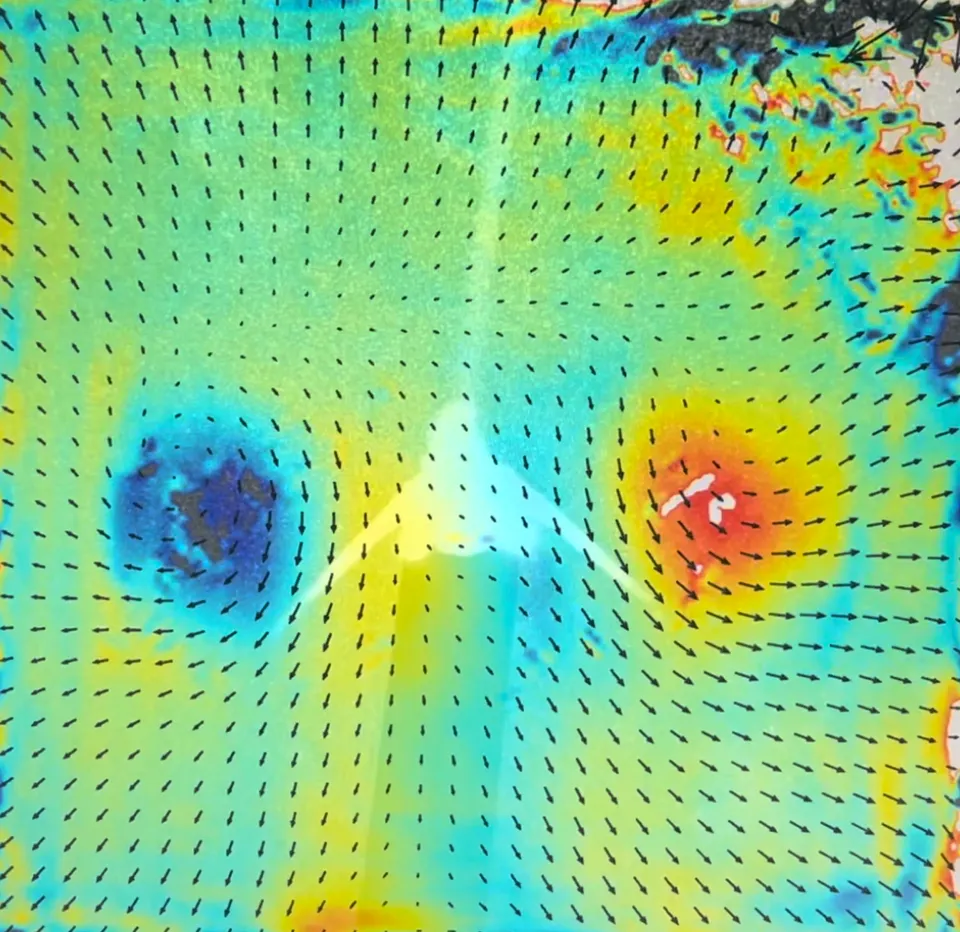
My lab is currently exploring questions associated with how a hummingbird’s unique anatomical design impacts the biomechanics of flight and the associated energetic cost. Our approach involves laboratory studies where flight conditions are controlled in a wind tunnel and field studies of hovering flight currently being conducted in southeastern Arizona.
Over the years this work has taken a number of forms. We have measured the motion of air in the wake of the wings, filmed birds with high-speed cameras, recorded the activity and length change of the flight muscles, and measured the energy a bird spends in flight. Some questions have been answered with computer models of the flow around a flapping wing rather than with a live bird, and much of the work has been done with engineers as well as biologists. The questions have ranged from steady hovering and forward flight to fast maneuvers, escape, and the use of the tail, and from single species in a wind tunnel to comparisons across many species. Together they describe how a hummingbird produces the forces it needs, what those forces cost, and where the limits lie.
Physiological impact of keel bone fractures in laying hens
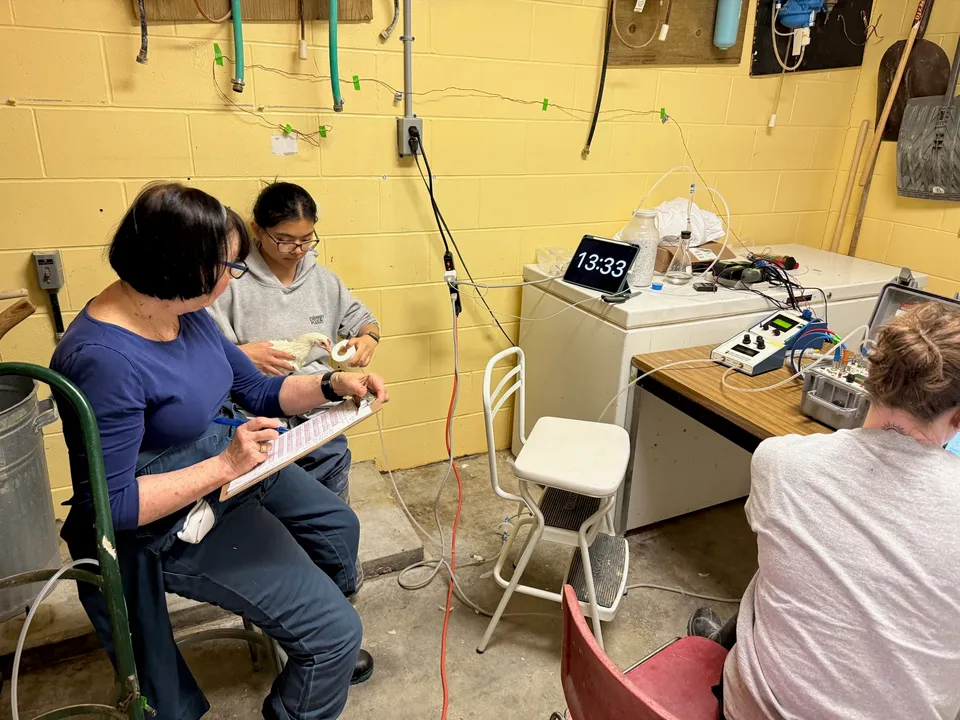
The current movement to transition laying hens from caged to free-roaming environments has resulted in an increased frequency of keel bone fractures. We have studied how keel bone fractures during the rearing and early laying period of hens impact energy costs and potentially egg production. We are part of a larger effort to design healthier environments for laying hens where the frequency of these fractures might be reduced.
Cage-free housing is better for hens in most ways, but it adds a problem they are not well built for: height. Laying hens have been bred for egg production, not for flight, and in an aviary they must move between perches and tiers with little control over how they land. Collisions and hard landings are common, and the keel — the ridge of the sternum that anchors the flight muscles — takes the impact. In some housing systems most of the flock ends up with a fracture.
Our part of the work is to measure the cost. A fracture is not a single event; a hen carries a healing or healed keel for weeks or months. We measure metabolic rate, muscle structure, and movement through rearing and early laying, when both the fractures and the bird’s adult bone and muscle are still being set.
Much of the practical hope lies in the rearing environment. Exercise during rearing — wing-assisted incline running, which in practice means ramps the birds have to work their way up — changes muscle structure and improves control during descent, which is when most fractures happen. The aim is housing that gives hens the freedom of a cage-free system without the injury rate.
Research legacy
Work I have not been active in for some years, though one or two more papers may still come from it.
Reproductive energetics of the red-sided garter snake
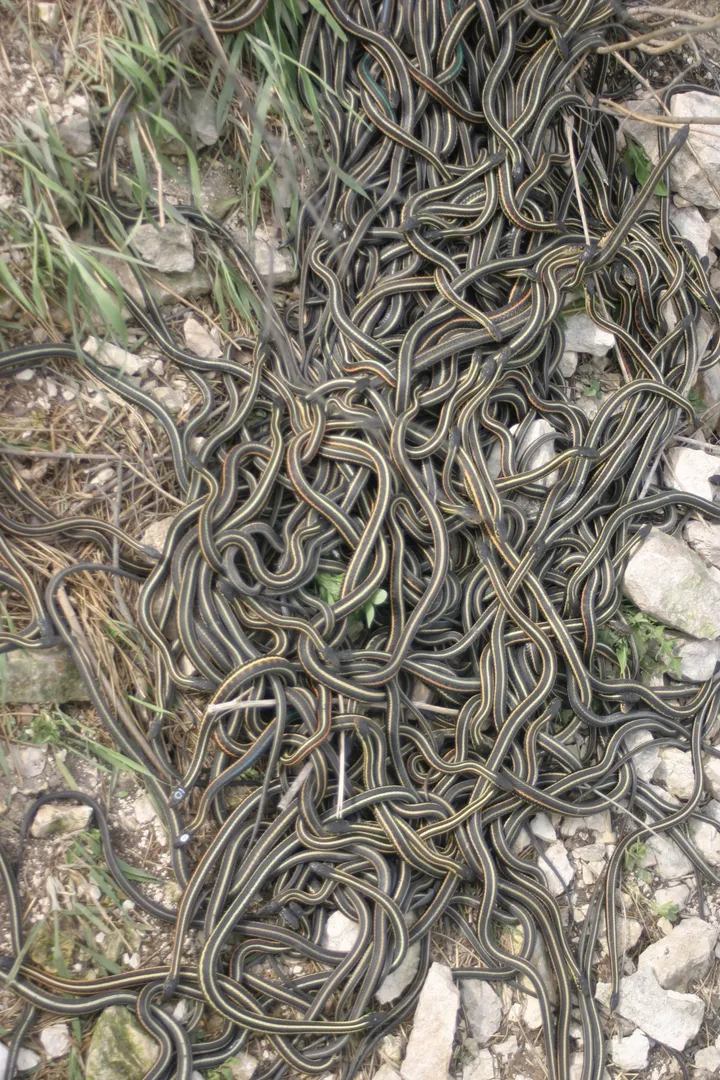
In collaboration with Bob Mason and Chris Friesen, my lab explored the reproductive energetics of red-sided garter snakes (Thamnophis sirtalis parietalis), with particular interest in male-male competition for females and the energetic cost to females during courtship and copulation. Earlier experiments looked at how body size, in both males and females, and mating-group size affect reproductive costs. Later work examined the cost of producing a copulatory plug and how that cost varies with male body size.
These snakes are a useful system because of the very high number of males competing for a few females as they emerge from hibernation. Whole-group respirometry made it possible to measure the cost of courtship in an aggregation rather than one animal at a time. A related study examined the energetic consequences for a lizard population living at the northern edge of its range.
- Friesen, Powers & Mason 2017. Using whole-group metabolic rate to assess the energetics of courtship in red-sided garter snakes. Animal Behaviour DOI
- Friesen et al. 2015. Size dependence in non-sperm ejaculate production is reflected in daily energy expenditure and resting metabolic rate. Journal of Experimental Biology DOI
- Powers et al. 2018. Energetic consequences for a northern, range-edge lizard population. Copeia DOI
Undergraduates did much of this
Nearly all of the work above ran on undergraduate researchers, many of whom appear as co-authors on the papers cited here. Several have gone on to graduate programs and research careers of their own.